





Home Insurance for Tenants vs Homeowners in the UAE: What Changes?
Get the Best Insurance Plan that fits for your Need
- Introduction
- Why Do Tenants and Homeowners Need Different Types of Home Insurance?
- What Does Home Insurance Cover for Homeowners?
- What Does Home Insurance Cover for Tenants?
- Tenant vs Homeowner Insurance: Key Differences
- Who Is Responsible for the Building and Who Is Responsible for the Contents?
- Does Tenant Insurance Cover Personal Belongings?
- Does Home Insurance Cover Accidental Damage and Liability?
- How Much Home Insurance Coverage Do Tenants and Homeowners Need?
- How to Choose the Right Home Insurance Policy in the UAE
- Frequently Asked Questions about Home Insurance for Tenants vs Homeowners
Introduction
Renting an apartment and owning a villa call for very different kinds of protection, even though both fall under the same term of “home insurance.” Home insurance for tenants vs homeowners UAE isn’t one-size-fits-all, and buying the wrong type of cover can leave you exposed exactly when you need it most, whether that’s a burst pipe, a break-in, or a guest who slips in your living room.
We put this guide together to make the difference clear, so you know exactly what you’re paying for.
Why Do Tenants and Homeowners Need Different Types of Home Insurance?
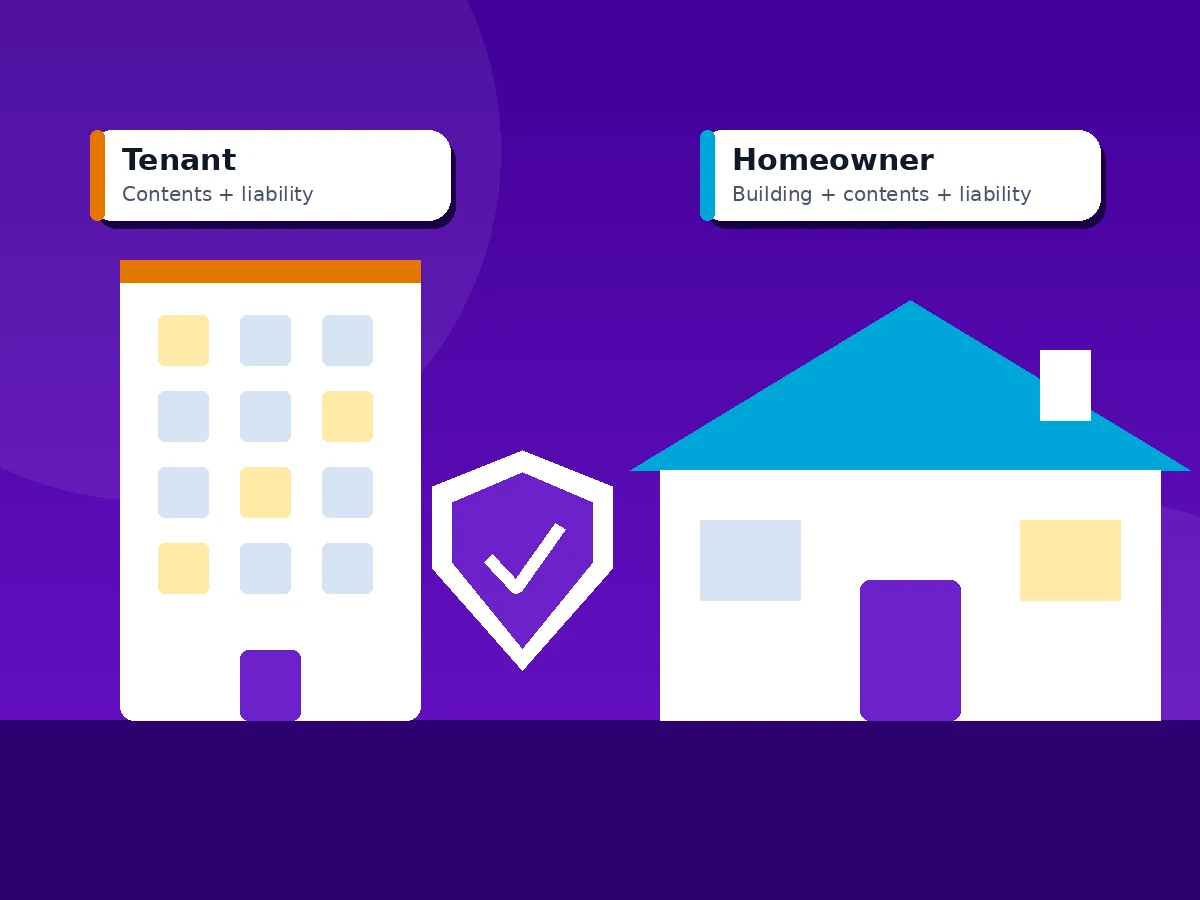
The core reason comes down to ownership. Tenant home insurance UAE exists because renters own their belongings but not the building around them, so their risk sits entirely with what’s inside the four walls. Homeowners insurance UAE has to protect both the structure and everything inside it, since the owner carries full financial responsibility for the property.
This distinction shapes almost everything about how each policy is built:
Tenants generally don’t need to insure walls, roofs, or fixed structures, since that’s the landlord’s responsibility
Homeowners often need to cover the building, the contents, and their liability all under one policy
Mortgage lenders usually require building insurance from owners, but tenants have no such legal obligation unless their lease says otherwise
What Does Home Insurance Cover for Homeowners?
Homeowners insurance UAE typically bundles together a few distinct types of protection into one policy. A comprehensive plan usually includes:
Building cover
The structure itself, including walls, roof, floors, and permanent fixtures.
Contents cover
Furniture, appliances, electronics, and other movable items you own.
Personal belongings cover
Items you regularly carry outside the home, like jewellery or watches.
Liability cover
Protection if someone is injured on your property or you accidentally damage a neighbour’s unit.
If you own an apartment in a jointly owned building, your building’s structure may already be partly covered under the owners’ association’s master policy, so it’s worth checking what that covers before you pay twice for the same protection.
What Does Home Insurance Cover for Tenants?
Home insurance for renters UAE looks quite different, since you’re not insuring anything you don’t own. Your policy generally focuses on:
Contents cover for your furniture, electronics, and personal items
Personal belongings cover for things you take outside the home
Tenant’s liability cover, in case you accidentally damage the landlord’s fixtures or a neighbour’s property
Tenant home insurance UAE won’t cover the building structure at all, since that stays the landlord’s responsibility. What it does cover is everything you’d genuinely lose money replacing, from your sofa to your laptop.
Tenant vs Homeowner Insurance: Key Differences
Here is how the two types of cover compare on the points that matter most.
Building cover
Tenant: not needed, it’s the landlord’s responsibility. Homeowner: usually required, especially if mortgaged.
Contents cover
Tenant: essential. Homeowner: essential.
Personal belongings
Tenant: optional add-on. Homeowner: optional add-on.
Liability cover
Tenant: covers damage to the landlord’s or neighbour’s property. Homeowner: covers injury or damage claims from others.
Legal requirement
Tenant: rarely mandatory, unless the lease requires it. Homeowner: often mandatory if the property is mortgaged.
Home insurance for tenants vs homeowners UAE really comes down to one question: who’s financially on the hook if the building itself is damaged? If the answer isn’t you, you don’t need to insure it.
Who Is Responsible for the Building and Who Is Responsible for the Contents?
This is the split that trips people up most often. Landlord insurance UAE covers the structure, the fixed fittings, and often the furniture supplied in a furnished rental, but it stops there. Anything you personally bring into the property isn’t the landlord’s problem to insure.
Home contents insurance UAE exists precisely to fill that gap, whether you’re a tenant or a homeowner living in the property. If your apartment floods or gets broken into, the landlord’s building policy won’t reimburse you for your damaged laptop or stolen jewellery. That’s on your own contents policy, if you have one.
Does Tenant Insurance Cover Personal Belongings?
It can, but usually only if you add it. Renters insurance UAE typically separates contents cover (items that stay inside the home) from personal belongings cover (items you carry or wear outside the home, like a watch, handbag, or phone).
If you only buy basic contents cover, a laptop stolen from your car or a phone lost while travelling likely won’t be covered. If you want that broader protection, check whether your policy includes personal belongings cover, or whether it’s a paid add-on you need to select separately.
Does Home Insurance Cover Accidental Damage and Liability?
Both tenants and homeowners can be held responsible for accidental damage under UAE law, so liability cover matters more than most people realize. Landlord insurance UAE usually protects the property owner if someone is injured due to a structural issue or maintenance failure, but it won’t protect a tenant who accidentally causes damage to someone else’s unit.
Home insurance for tenants vs homeowners UAE both need liability protection, just aimed at different risks:
Tenants need liability cover for damage they cause to the landlord’s fixtures or a neighbour’s property
Homeowners need liability cover for injuries or damage claims from visitors, tenants, or neighbours
A small leak from your washing machine that floods the apartment below can turn into a costly claim fast, so this isn’t a section to skip.
How Much Home Insurance Coverage Do Tenants and Homeowners Need?
There’s no single number that works for everyone, but a few practical questions help you land on the right figure. Home contents insurance UAE should reflect the actual replacement cost of everything you own, not what you originally paid for it years ago. Consider these factors when deciding on coverage:
The total value of your furniture, electronics, and appliances
Any high-value items like jewellery, art, or watches that need separate declaration
Whether you’d need temporary accommodation if your home became unlivable
Your exposure to liability claims, based on your living situation and household size
Home insurance for tenants vs homeowners UAE coverage amounts should be reviewed periodically too, since replacement costs tend to rise over time.
How to Choose the Right Home Insurance Policy in the UAE
Start by being honest about what you actually own and what you’re responsible for. Home insurance for renters UAE should focus on contents, belongings, and liability, without paying for building cover you don’t need. Homeowners should look at bundled policies that combine building, contents, and liability, and check whether an existing master policy already covers part of the structure. A few practical steps before you buy:
List your belongings and estimate their replacement value honestly
Check your tenancy contract for any insurance requirements your landlord has included
Compare renters insurance UAE quotes side by side rather than accepting the first offer
Ask about exclusions, especially around water damage, since it’s one of the most common claims in the UAE
Frequently Asked Questions about Home Insurance for Tenants vs Homeowners
Not usually. There’s no federal law forcing tenants to buy insurance, though some landlords or communities include it as a condition in the lease.
No. A landlord’s building policy only covers the structure and, in furnished rentals, the furniture they provide. Your own belongings need your own contents policy.
Most do, since building cover protects the structure and contents cover protects everything inside it. If you have a mortgage, your lender will typically require building cover as a condition of the loan.
Contents insurance covers items inside your home, while personal belongings cover protects items you carry or wear outside the home, like jewellery, watches, or a laptop.
Yes, and it’s worth having. Tenant’s liability cover protects you if you accidentally damage the landlord’s fixtures or a neighbour’s property, which can otherwise come entirely out of your own pocket.
Whether you’re renting your first apartment or covering a villa you own outright, we can help you work out exactly what home insurance for tenants vs homeowners UAE should look like for your situation. Reach out to us, and we’ll match you with a policy that covers what actually matters to you.
- Introduction
- Why Do Tenants and Homeowners Need Different Types of Home Insurance?
- What Does Home Insurance Cover for Homeowners?
- What Does Home Insurance Cover for Tenants?
- Tenant vs Homeowner Insurance: Key Differences
- Who Is Responsible for the Building and Who Is Responsible for the Contents?
- Does Tenant Insurance Cover Personal Belongings?
- Does Home Insurance Cover Accidental Damage and Liability?
- How Much Home Insurance Coverage Do Tenants and Homeowners Need?
- How to Choose the Right Home Insurance Policy in the UAE
- Frequently Asked Questions about Home Insurance for Tenants vs Homeowners